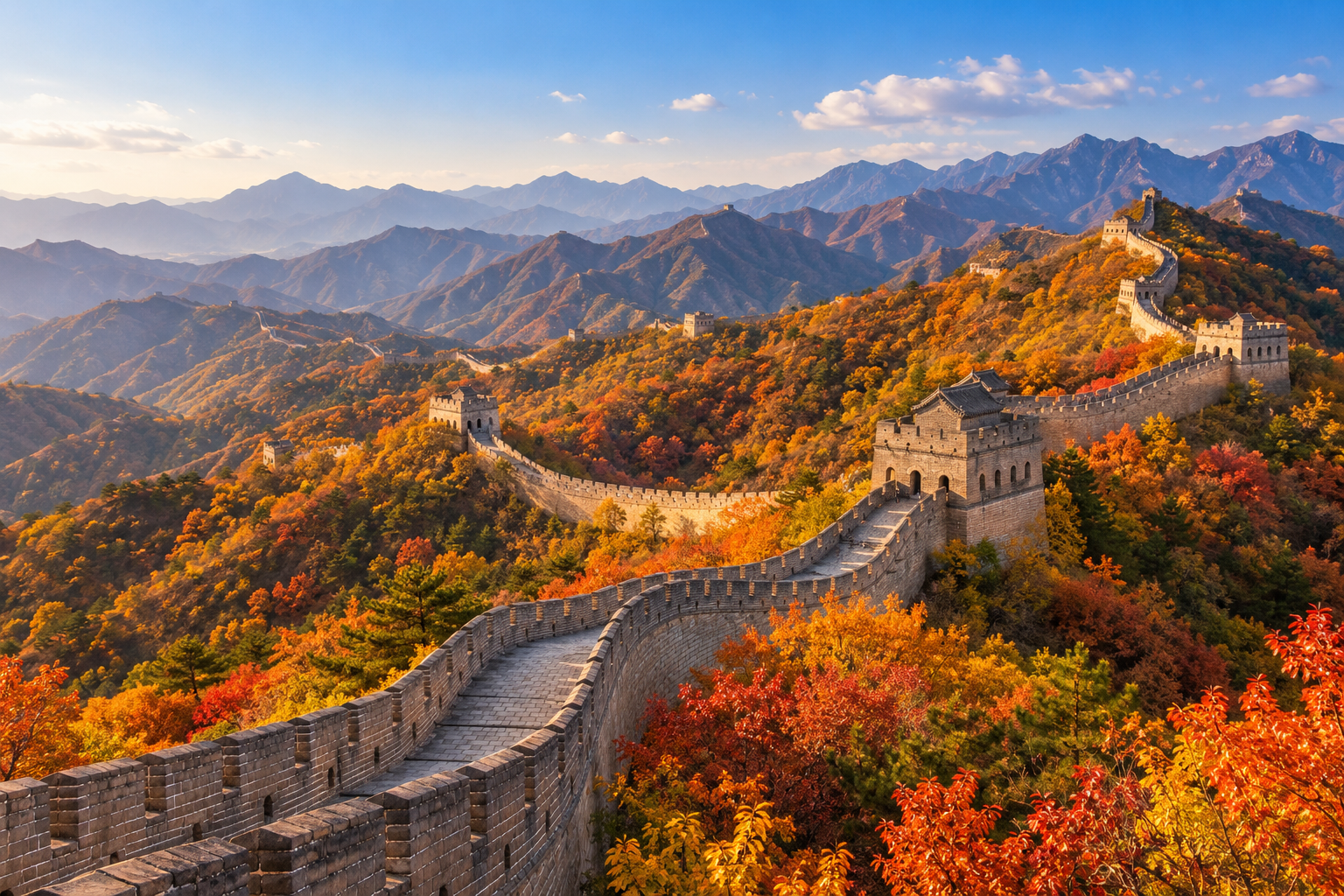
Autumn changes at a different pace across China. Northern forests can reach their strongest color while southern landscapes are only beginning to cool. A successful trip therefore depends less on trying to see everything and more on choosing a region, allowing enough time and preparing for variable mountain weather.
1. Beijing and the Great Wall
Autumn gives the Great Wall a strong visual contrast: grey stone, clear blue sky and hills covered in warm color. Sections outside the busiest visitor areas can feel quieter, but they may involve longer transfers and steeper walking. Choose the section according to mobility, available time and the kind of experience you want rather than selecting only by photographs.
Begin early so the day has room for transport and changing conditions. Temperatures can shift quickly between sunny sections and exposed ridges, so carry a light insulating layer and water. In the city, parks and tree-lined historic areas offer an easier second day after a long walk.
2. Huangshan and nearby villages
Huangshan combines granite peaks, sculptural pine trees and valleys that often fill with mist. Autumn color appears below and between the high viewpoints, while nearby villages add fields, traditional architecture and a slower rhythm. The mountain experience can change completely with cloud, rain or wind, so avoid building the entire trip around one exact photograph.
Allow at least one full day for the mountain and another for the surrounding area. Paths include many stone steps, and distances that look short on a map can take longer than expected. Pack for cool conditions, wear shoes with reliable grip and keep the schedule flexible enough to pause when visibility improves.
3. Zhangjiajie and Fenghuang
Zhangjiajie's tall sandstone formations rise through dense forest, creating a landscape that feels dramatic in every season. In autumn, areas of red and gold foliage add detail between the pillars. Viewpoints are spread across a large park, so choose a manageable group instead of trying to move through every scenic area in one day.
Fenghuang provides a different experience several hours away: riverfront streets, wooden buildings and evening reflections on the water. Combining the two places works best when travel time is treated as part of the itinerary, not squeezed between full sightseeing days. An extra night can make the route noticeably calmer.
4. Guilin and the Longji terraces
The landscape around Guilin is known for limestone peaks and rivers, while the Longji terraces create broad patterns across the hillsides. Around harvest season the fields can turn warm gold, though the exact timing changes with weather and local farming schedules. The terraces involve climbing, so decide in advance how far you want to walk and where you will stay.
In the surrounding countryside, slower activities such as cycling, riverside walking and village visits make a useful contrast to viewpoint-focused days. Keep one part of the schedule open for weather. Clear conditions are wonderful, but low cloud can create its own softer version of the landscape.
Plan the route around one or two regions
These destinations are far apart. For a shorter trip, choose one region and explore it properly. For a longer itinerary, connect only places that make sense by rail or a straightforward flight, and leave recovery time after major transfers.
Check current entry requirements, transport schedules, park opening information and seasonal weather shortly before departure. Reserve popular accommodation and long-distance tickets early, but keep local days flexible. Autumn travel is most rewarding when the plan gives you time to notice the season rather than rushing from one famous view to the next.