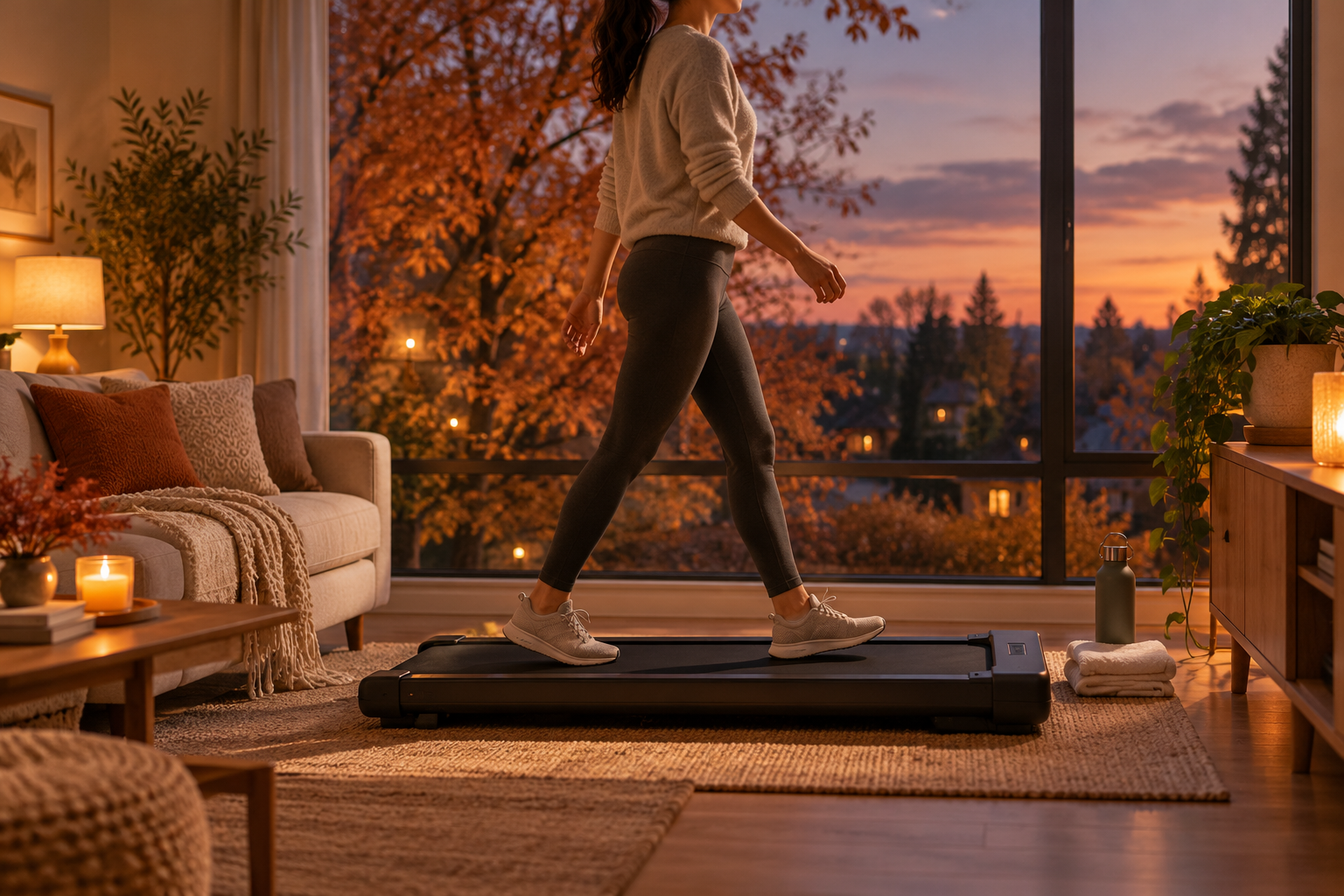
Autumn can quietly change an active routine. Morning light arrives later, evenings become colder and a short outdoor walk starts to require more planning. An indoor walking plan removes the weather decision. It does not need to be intense, and it does not need to happen in one long session. The goal is simply to create a dependable form of movement that still fits ordinary days.
Start with a weekly target you can divide
Choose a total amount of walking that feels realistic for the coming week, then divide it into several sessions. Someone returning to regular movement might begin with 75 to 100 minutes across five days. A person who already walks consistently may prefer 150 minutes or more. The exact number matters less than choosing a target you can repeat without rearranging your whole life.
Think in blocks of ten, fifteen or twenty minutes. A ten-minute walk before breakfast and another after dinner still count as twenty useful minutes. Short sessions also make it easier to begin on days when energy is low. If you feel good after the planned time, continue; if not, the session has already done its job.
Build three types of walk
A varied week can be created with only three simple formats. The first is an easy walk at a pace that allows comfortable conversation. Use it for recovery days or when you want to listen to music, an audiobook or a calm podcast.
The second is a steady walk that feels purposeful but controlled. Begin with five easy minutes, walk steadily for ten to twenty minutes and finish with a few slower minutes. The third is a light interval walk: alternate one minute of brisk walking with two minutes at an easy pace. Repeat the pattern four to six times. Intervals add variety without requiring a long workout.
If you use a treadmill, increase pace or incline gradually and keep the safety key in place. If you walk through rooms or along a hallway, use a clear route and remove loose rugs, bags and cables. Comfort and consistency are more valuable than chasing a particular number on a screen.
Use effort, not speed, to guide the session
Speed varies widely between people and equipment, so use a simple effort scale instead. An easy walk should feel like three or four out of ten. A steady walk may feel like five or six. A brisk interval can reach six or seven, but you should still feel in control and able to recover during the easier minutes.
Posture matters more than forcing a fast pace. Look ahead, keep the shoulders relaxed and allow the arms to swing naturally. Shorten your stride if you feel yourself reaching forward or landing heavily. Stop if you experience pain, dizziness or unusual shortness of breath, and seek professional advice when appropriate.
Make the space easy to use
The best indoor setup is the one that requires very little preparation. Keep walking shoes, a water bottle and a small towel nearby. If the equipment folds, make sure opening it is simple enough that it does not become a reason to postpone the walk. A fan and an open window can make a small room more comfortable.
Pair the session with a reliable cue: after the first cup of coffee, when work ends or before the evening shower. You can also reserve a favorite series or podcast for walking time. The cue should make starting easier, not turn the routine into a reward system you must manage perfectly.
A realistic seven-day plan
Monday: 15 minutes at an easy pace. Tuesday: 20 minutes steady, including an easy warm-up and cool-down. Wednesday: rest or take two relaxed five-minute walks. Thursday: 18 minutes with four one-minute brisk intervals. Friday: 15 minutes easy. Saturday: 25 to 30 minutes at a comfortable pace. Sunday: rest, stretch gently or take a short walk if it feels good.
If a day becomes crowded, move the session or shorten it. Do not try to “repay” missed minutes with an exhausting workout. A sustainable plan accepts that some weeks are uneven. What matters is having a clear place to return when the next darker afternoon arrives.