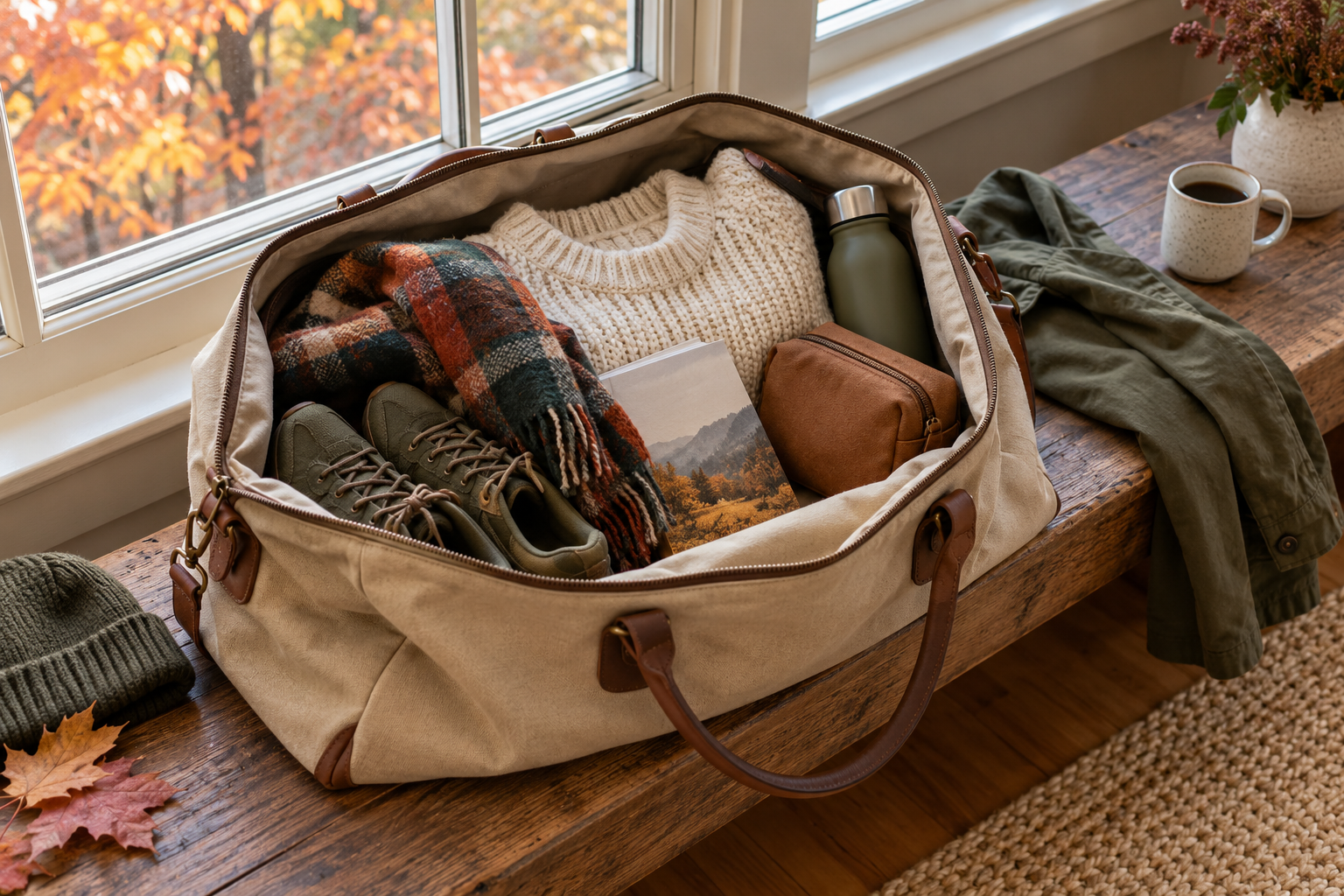
Autumn weekend packing is less about bringing more and more about choosing pieces that work through a cool morning, a warmer afternoon and an unexpectedly damp evening. Start with the actual plan, build around layers and leave enough room in the bag that repacking does not become a puzzle.
Check the plan and the full weather range
Look at daytime and overnight temperatures, the chance of rain and the wind rather than reading only the weather icon. Then write down the activities you are reasonably likely to do: travel, one longer walk, a relaxed meal and perhaps a museum or indoor stop. Pack for that list, not for every possible invitation.
If one activity requires a special item, decide whether it is important enough to shape the rest of the bag. A formal dinner may justify one pair of smarter shoes. A short countryside walk probably does not require technical equipment if the route is gentle and the forecast is stable.
Build a small layered wardrobe
Begin with two comfortable base tops, one warmer knit and a light outer layer that blocks wind or light rain. Add one bottom you can wear for most of the weekend and a second only if the first is unsuitable for part of the plan. Choose colors and shapes that work together so every layer can be repeated.
A scarf can add warmth without taking the space of another heavy sweater. Wear the bulkiest shoes and outer layer during travel. Pack sleepwear, underwear and socks in one small pouch so the main compartment stays easy to see.
Pack for comfortable walking and a change in weather
Choose shoes that are already comfortable rather than a new pair you hope will work. Check the soles if paths may be wet. Add a compact umbrella or a packable rain layer, but avoid carrying both unless the forecast clearly supports it.
A reusable bottle, small day bag and lightweight tote cover most daytime needs. If you are driving, keep a dry pair of socks and a compact blanket in the car instead of forcing every backup into the weekender.
Keep personal items small and familiar
Use travel-size containers for the products you will actually use: cleanser, moisturizer, sun protection, toothbrush and any daily medication. Skip the collection of samples that have never been tried before. A weekend away is not the best time to test several unfamiliar skincare products.
Pack one charger with the correct cable, headphones if they are part of the journey and a paperback or downloaded reading. Save essential booking details offline. The aim is to carry what supports the weekend, not reproduce the entire home routine in a smaller bag.
The final two-day list
Wear: comfortable trousers, base top, knit, outer layer and walking shoes. Pack: one additional top, one optional second bottom, sleepwear, underwear, socks and scarf. Weather: compact umbrella or packable rain layer. Personal: small toiletry pouch, medication and sun protection. Useful extras: charger, bottle, day bag, book and reservation details.
Before closing the bag, remove one “just in case” item that has no specific use. A little empty space makes the return journey easier and gives you room for a small local find. The most useful packing list is the one you can carry comfortably and unpack without wondering why half of it came along.