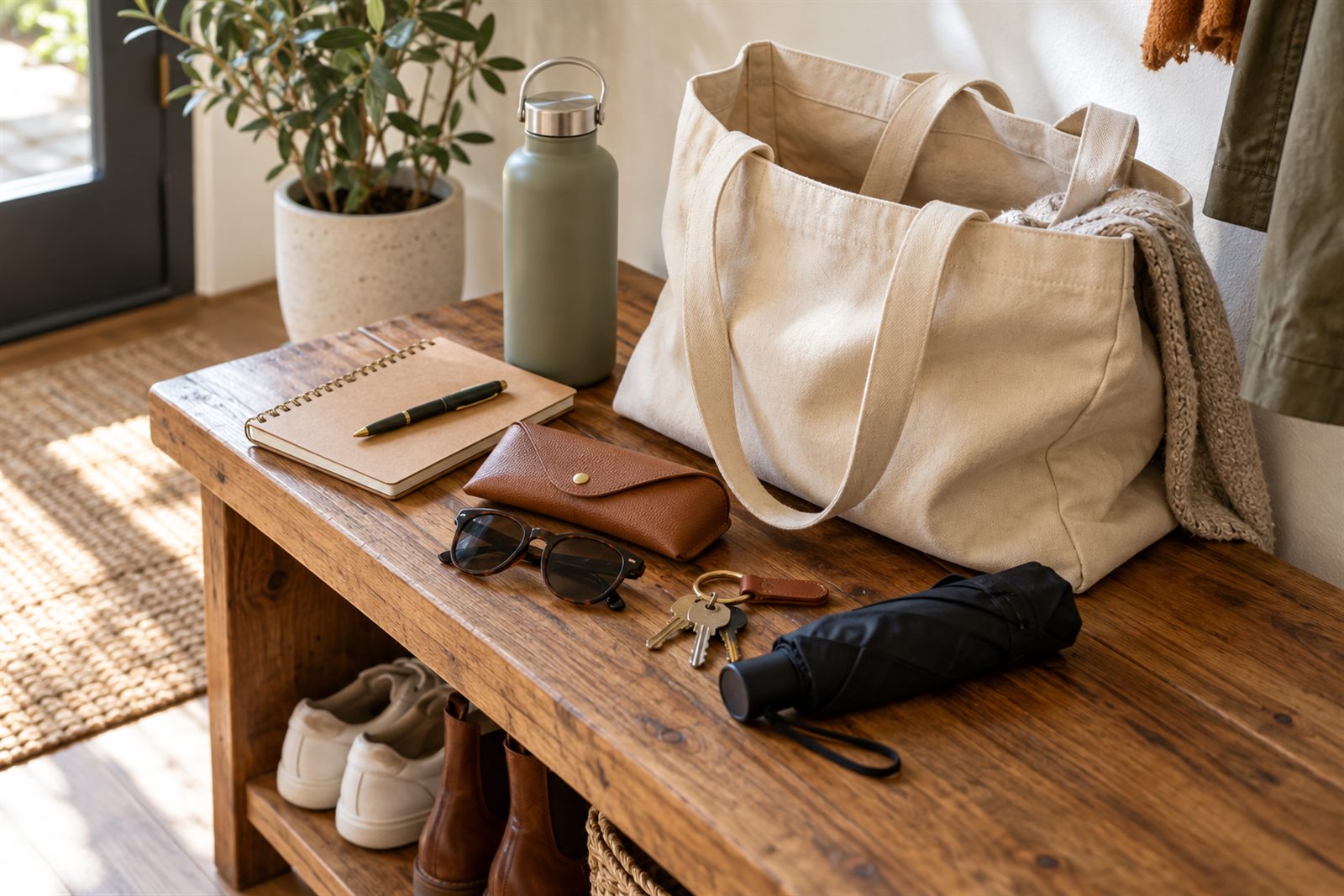
Begin with the actual daily load
Place everything you normally carry on a table before comparing bags. Include the less photogenic items: charger, water bottle, medication, umbrella, lunch container or paperwork. Measure the largest object and note whether anything needs to stay upright or protected.
A tote that looks spacious can become awkward once a laptop sleeve or water bottle takes up the center. Check the published interior dimensions and compare them with a bag you already know. If shopping in person, bring the largest everyday item and test the fit.
Check handles and weight distribution
Handle drop determines whether the bag sits comfortably on a shoulder over different clothing. Try the tote with a realistic load, not empty. Walk, reach and sit down to see whether the bag slides, bumps against the body or pulls at one point.
Wide straps can spread weight, while a crossbody strap may help on longer walks. Hardware and decorative details add weight before the bag is packed. If you regularly carry heavy items, the lightest suitable bag may be more useful than the most structured one.
Inspect construction where stress collects
Look at handle attachments, base corners, zipper ends and the seams around pockets. Even stitching, reinforced stress points and a base that suits the intended load matter more than a large number of compartments. Open and close every fastener with one hand.
Consider the material in ordinary weather and on public transport. A pale open tote may require more care; a rigid edge may be uncomfortable in a crowded space. Care instructions should match what you are willing to do when the bag gets wet or dirty.
Choose organization you will maintain
One secure pocket for keys and a phone can be more useful than many small sections. If you change bags often, a removable pouch may prevent essentials from being forgotten. If the tote has no closure, decide whether that feels acceptable for your commute and destinations.
Review the seller's current return information before ordering and keep packaging until you have tested the bag indoors. The right tote is the one that makes repeated days easier, not the one that looks most impressive while empty.