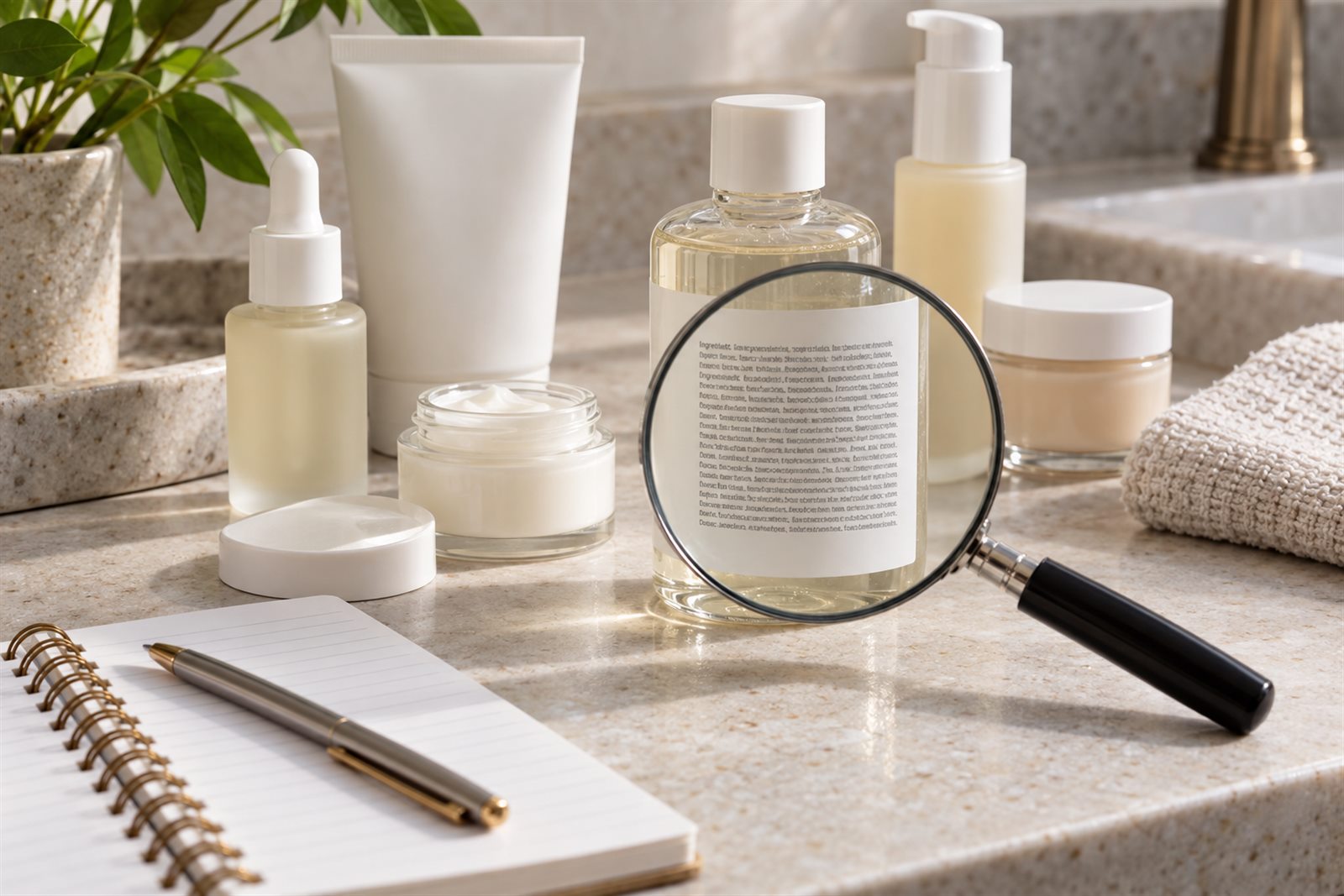
Start with the product category
Read an ingredient list in the context of what the product is designed to do. A cleanser is rinsed away, a moisturizer stays on the skin and a targeted treatment may come with specific frequency instructions. The same ingredient can play a different role depending on the formula, concentration and how the product is used.
Before studying individual names, read the directions and warnings supplied by the manufacturer. They tell you where the product belongs in a routine, whether it should be kept away from the eye area and how often it is intended to be applied.
Understand the order without overreading it
Cosmetic ingredients are generally listed in descending order until the low-concentration portion of the formula, after which ordering rules can vary by market. That makes the first part of the list useful context, but it does not reveal an exact recipe. A familiar ingredient near the end is not automatically ineffective, and a long technical name is not automatically harsh.
Names often follow standardized cosmetic terminology so the same material can be recognized across products and regions. Fragrance components, colorants and botanical names may look especially unfamiliar. If you need to avoid a known allergen, compare the exact label with advice from an appropriate medical professional rather than relying on a simplified online list.
Separate ingredients from marketing claims
Words on the front of a package describe how a brand positions the product; the ingredient list records what is in it. Neither alone can guarantee how your skin will respond. Texture, packaging, stability and the combination of ingredients all affect the finished formula.
Look for claims that matter to your own needs, then check whether the directions make those claims practical. A product described as gentle may still be unsuitable for a particular person, while an ingredient that sounds intensive may be comfortable in a well-designed formula.
Introduce new products methodically
Add one new leave-on product at a time when possible. Follow the supplied instructions and consider a small-area trial if you have reactive skin or a history of sensitivities. Stop using a product if you develop a concerning reaction and seek qualified care when needed.
Record the date you opened the product and store it as directed. Changes in color, odor, separation or texture can be signs that it should no longer be used. Reading labels is most useful when it supports careful observation, rather than turning every unfamiliar word into a warning.